About the School
Something is wrong with how we think about critical thinking.
There is a foundational assumption that has gone unquestioned for so long that it has become invisible. We decided, somewhere along the way, that becoming a critical thinker means either filling our minds with content, or learning formulas to follow. This belief informs education and affects how we behave all the way from kindergarten to the boardroom. But knowing content and formulas without the ability to reason with them "in the wild" is pointless. We see it every day: educated people who lack basic skills of thinking critically in context are everywhere.
I spent over a decade teaching philosophy and critical thinking at my university, in the heart of New York City. Every year, I watched students struggle with the same things: understanding abstraction and complexity, reasoning about causes, thinking clearly with incomplete evidence. The kids are bright and opinionated but nobody had ever taught them how to actually think. They come to college, sometimes with very strong opinions about everything, but lack the basic skill of understanding where those opinions came from and how to tell if they're right or wrong.
Then my daughter started school.
I was proud and happy. I believed in the mission of public education to create thinking creatures that will usher us into a better world. I thought that public school, more than anyone else, is best positioned to help my child become the best thinker she could possibly be.
Boy was I wrong.
As I'm sure many other parents intuit, the school curriculum is rich in content, but very thin on actual thinking. Kids are bombarded with facts and formulas and with almost nothing about what lies between the two: intuitions and concepts about why the world behaves like it does.
Very quickly, I realized that if I wanted her to learn to think and not just have a mind full of sparsely connected ideas, I was going to have to teach her myself.
So that's what I did: I built the whole curriculum I wish had existed when she started (and when I was a child) that builds her thinking capabilities from scratch. I started teaching her things at home that she doesn't learn anywhere else.
It was easy for me to build this curriculum, I guess, since I am a professional: I've been doing the same for other people's kids for more than a decade. But then it dawned on me that there are other parents out there who feel the same about their child's education, and who'd need a helping hand in teaching their kids how to prepare for the world in which machines will do most of the thinking for us. That's when I decided that the curriculum I was making must be made available to every parent who has ever felt the same.
That curriculum is what you'll find here.
It's built around a simple but radical idea: reality has structure. The world doesn't behave randomly. It behaves according to patterns, causes, probabilities, models, and tradeoffs. I organize it around five structures that govern nearly everything that happens, from weather systems to stock markets to human relationships, and yes, your own decisions too.
I strongly believe that a child who understands these structures doesn't just know more, but can also think differently. They will ask better questions; they won't mistake coincidence for a cause or a confident voice for a correct argument. They will be harder to manipulate, clearer under pressure, and more capable of making decisions that hold up over time. They'll be prepared for the world that's coming.
Although I am a philosopher, I did not create this curriculum as a philosophy class. There are no Greek terms to memorize, no abstract debates about the nature of reality. All lessons are concrete, the examples are real, and the exercises require actual thinking, not just memory.
It is designed to be taught by a parent, not a professor or a specialist. You can all teach this. It is tailor made for a parent who wants something better for their child than what most curricula offer, and is willing to spend thirty minutes a week making it happen.
The world our children are growing up in will reward one thing above almost everything else: the ability to think critically. It is therefore imperative that we prepare our children for that. We don't know what the future will bring for the human race. Will most of our jobs be automated? Will computers take over everything? We can't know, by definition. So the only thing we can do for our kids is to help them develop skills that will make them resilient and ready for whatever that future brings. That ability is not given. It's built. Lesson by lesson, question by question, over years.
But this gap doesn't close when people grow up. The students I watched struggle at university became the professionals now making decisions under pressure, evaluating AI output, and leading teams. The problem doesn't go away; it gets more expensive. This is why I also work with organizations: schools, companies, leadership teams, and professional groups who want to build the same cognitive foundations in their people that I build in children. The curriculum and the organizational work share the same intellectual spine. The five structures that govern reality don't change between the classroom and the boardroom.
The mission of The School of Critical Thinking is to help you bridge that gap. Reach out if you have any questions, I'd be happy to help.
Founder
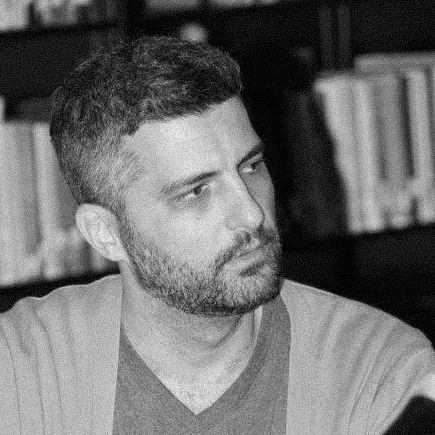
Eldar Sarajlic
Eldar Sarajlic is an Associate Professor at the City University of New York. With a Ph.D. in philosophy, he is an expert in critical thinking, particularly in its application to education. He published numerous scholarly studies in the world's leading academic and popular publications over the last decade. His passion is helping young people acquire thinking skills desperately needed in the world dominated by technology.
His approach is rooted in the same tradition of truth-seeking as academic philosophy, but applied to the real problems that people face: decisions under uncertainty, reasoning about complex systems, and maintaining judgment when working alongside AI.