
Level 1 · Module 1 · Ages 8–11
Seeing Patterns
The world contains patterns, but not every pattern is real.
Available now
Children encounter patterns constantly, in sequences, in nature, in other people's behavior, but rarely stop to ask whether those patterns are real or imagined. This module builds the first cognitive skill: seeing structure before explaining it. Students learn to spot genuine patterns, classify what they observe, and recognize when an apparent pattern is noise, coincidence, or wishful thinking. Designed as a weekly supplement: one lesson fits alongside any existing homeschool or after-school curriculum without displacing it.
At a glance
- Age range
- 8–11
- Duration
- 52 lessons · one per week · one full school year
- Lesson length
- 20–30 minutes
- Format
- Paperback and ebook
- Who teaches it
- Parent-led · no specialist background required
- Independent use
- Lessons can be read by the child, but exercises and discussion questions are designed for parent–child dialogue
- Viewpoint
- Worldview-neutral · compatible with any religious or secular core curriculum
- Intended use
- Weekly supplement · works alongside any core curriculum
- Grade equivalent
- Roughly grades 3–6, but skill-based rather than grade-locked
Who this is for
This module is designed for children aged 8–11, whether they are homeschooled full-time or studying at home after school. It works as a standalone course or as part of the full nine-module curriculum. Parents with no background in philosophy, logic, or education can teach it directly from the book. It is equally suited to children who are advanced readers and those who prefer to work through lessons with a parent.
What's inside
| Part | Focus | Lessons |
|---|---|---|
| 1 | Discovering Patterns | Lessons 1–10 |
| 2 | Recognizing Patterns | Lessons 11–20 |
| 3 | Hidden Patterns | Lessons 21–30 |
| 4 | When Patterns Mislead | Lessons 31–40 |
| 5 | Using Patterns to Think | Lessons 41–52 |
Part 1 · Lessons 1–10
Discovering Patterns
Patterns are hiding everywhere: in forests, in music, in the way people behave, even in the shapes of snowflakes. These ten lessons train students to notice the hidden order in the world around them for the first time.
Part 2 · Lessons 11–20
Recognizing Patterns
Now things get sharper. Students learn how patterns are actually built: how to sort and classify, find sequences, spot growth and cycles, and predict what comes next with increasing precision.
Part 3 · Lessons 21–30
Hidden Patterns
The patterns found so far were sitting on the surface. Now students learn to find patterns that are hidden, buried beneath appearances, encoded in games and language, embedded in group behavior and markets.
Part 4 · Lessons 31–40
When Patterns Mislead
The most important section of the book. The brain is so good at finding patterns that it regularly invents ones that aren't there. Students learn to recognize coincidences, superstitions, confirmation bias, and the difference between correlation and causation.
Part 5 · Lessons 41–52
Using Patterns to Think
The payoff. Students learn to use patterns as active thinking tools: to predict outcomes, learn faster from mistakes, build better habits, and see the world with the kind of structural clarity most people never develop.
How you teach it
Each lesson opens with a short story or real-world example that the parent reads aloud or the child reads independently. A thinking question follows, designed to spark a conversation, not to be answered in a workbook. Exercises and discussion questions complete each lesson; these are where the parent's role matters most. Total preparation time per lesson is minimal: the lesson plan is built into the book.
How it works
- Each lesson is 20-30 minutes; one per week fits naturally into a school schedule.
- No specialist background required. Full lesson plans are included.
- Lessons are built around stories and discussion questions, not worksheets. The exercises require thinking and conversation, not fill-in-the-blank answers.
- Every unit includes exercises, discussion questions, and a short assessment.
Free sample
Download a lesson
Enter your email and we'll send you a complete lesson from this module, no commitment, no follow-up unless you ask for it.
One email address. One PDF. Nothing else.
The book
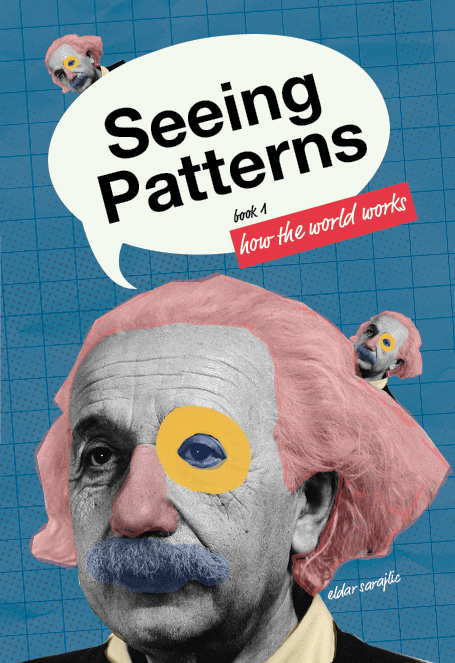
Seeing Patterns
The complete Seeing Patterns module in book form: 52 structured lessons for ages 8-11, ready to use at home or in the classroom.
Buy on Amazon →